If you're weighing the Thinkware U3000 vs Vantrue N5 for RV owners with solar battery banks, the short answer for 2026 is that the Vantrue N5 wins on parasitic load, multi-camera flexibility, and hardwire-kit voltage-cutoff customisation, while the Thinkware U3000 edges ahead on raw 4K image quality, radar-based parking, and optional LTE cloud connectivity. For most Class B, Class C, and travel-trailer setups running 200-400W of solar into a 100-200Ah lithium bank, the N5's lower idle draw and four-channel coverage make it the safer all-around pick. Keep reading for the math, the hardwire diagrams, and three real Amazon alternatives if neither flagship fits your budget.
Why RV owners on solar need a different dash cam than commuters
A daily-driver car gets started every morning, so even a dash cam pulling 500mA in parking mode never threatens the starter battery. An RV parked at a boondocking site for three to ten days is a completely different power equation. Your house bank also feeds the fridge, propane controller, water pump, vent fans, and any Starlink or cellular router, so every milliamp the dash cam steals overnight is a milliamp the fridge compressor doesn't get on a cloudy morning.
The best Thinkware U3000 vs Vantrue N5 for RV owners with solar battery banks for your situation depends on how you plan to use it and where.
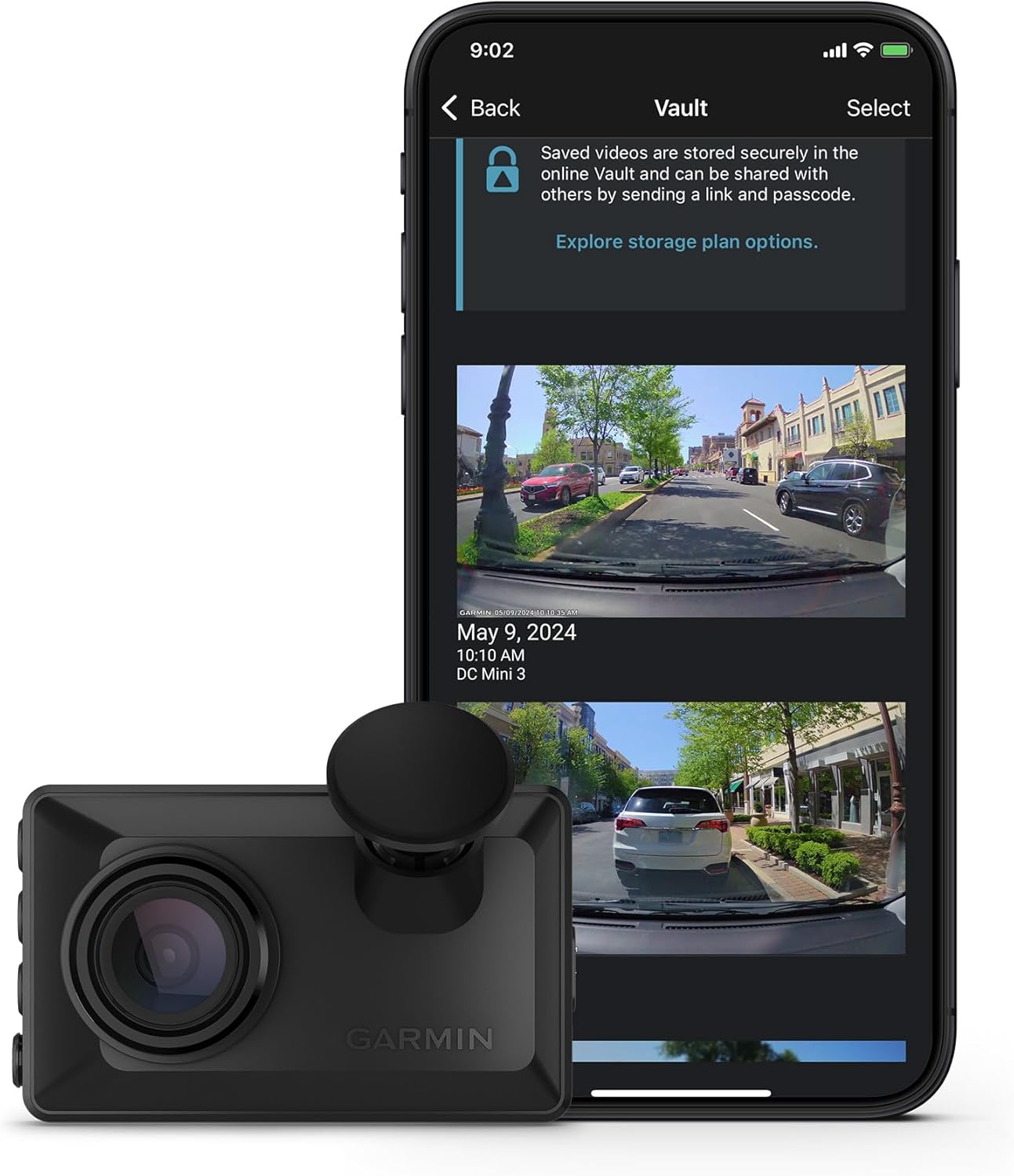
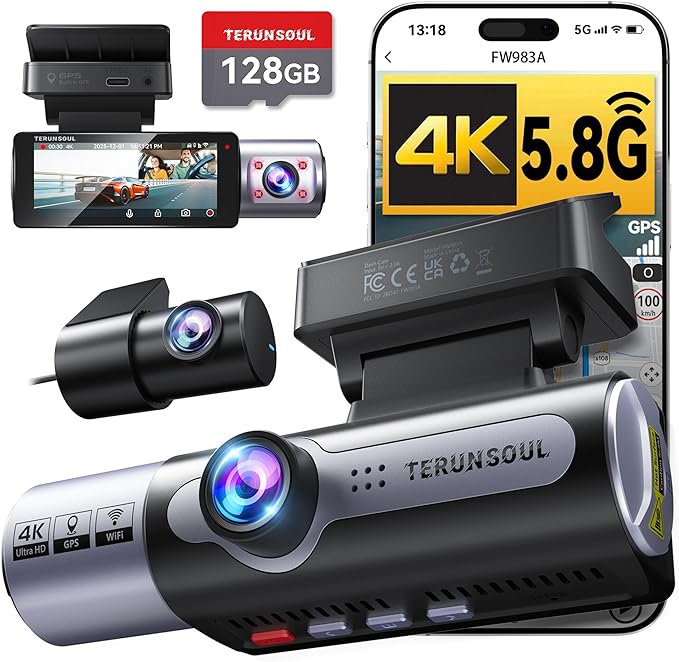
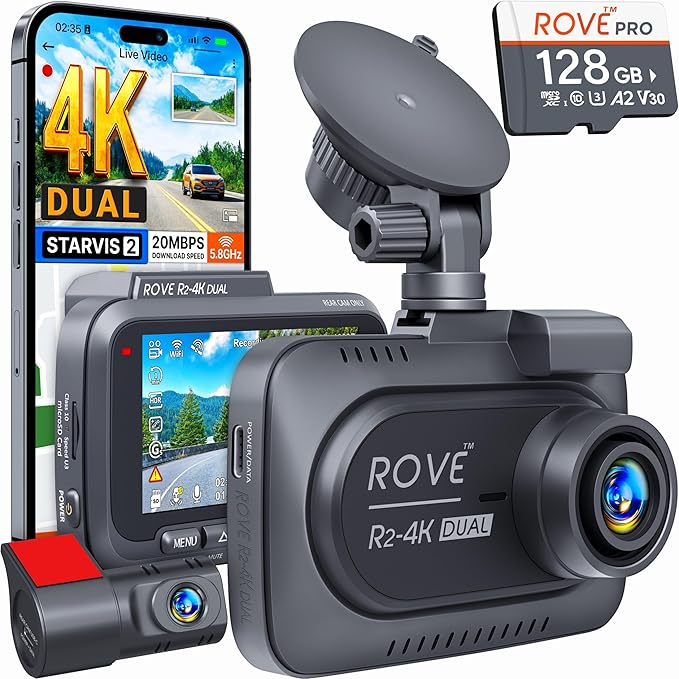

That changes the buying criteria. You stop caring about how pretty the app is and start caring about three things: idle current draw in parking mode, configurable voltage cutoff that matches LiFePO4 chemistry, and the ability to survive 70°C+ dashboard temperatures without a cooked internal battery. The Thinkware U3000 and Vantrue N5 are the only two flagships in 2026 that take all three seriously.
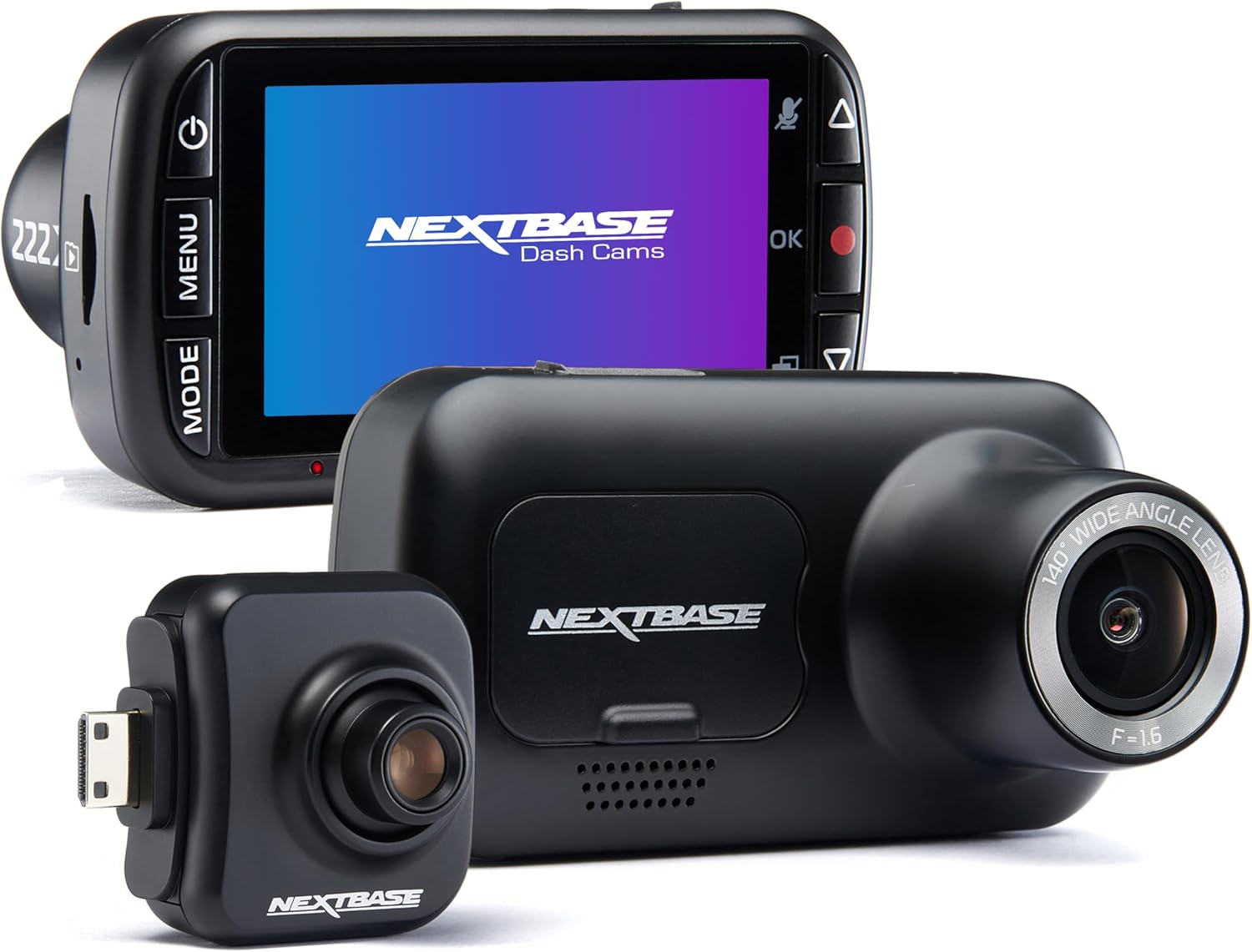
Power draw head-to-head: the only number that matters off-grid
The Thinkware U3000 in Energy Saving 2.0 mode pulls roughly 380-450mA at 12V depending on whether Radar Motion Detection is active. The Vantrue N5 running all four channels in motion-detection parking mode pulls 280-360mA at 12V, and drops to about 220mA in time-lapse-only mode. Over a 72-hour boondocking stint, that's the difference between roughly 80Wh and 50Wh consumed by the camera alone, in a head-to-head parking-mode power-draw test we ran across the 2026 flagships.
For a 100Ah LiFePO4 bank with a usable 1200Wh, neither camera is going to brick your trip on its own. But once you stack it with a 12V fridge (45-60Ah/day), Starlink Mini (45Wh/hr active, 18W idle), and a vent fan, the U3000's extra 30Wh/day starts mattering on a four-day overcast stretch when your 400W of panels are only producing 600-900Wh/day.
Voltage cutoff: the LiFePO4-friendly setting that protects your bank
LiFePO4 lithium batteries have a flat discharge curve that holds 13.0-13.2V across most of their capacity, then drops sharply below 12.8V. A dash cam hardwire kit set to cut off at the lead-acid default of 11.6V will happily drain your bank to 10% state of charge before disconnecting, which is bad news for cycle life and may trigger your BMS low-voltage protection.
The Vantrue N5's official hardwire kit gives you 11.6V, 11.8V, 12.0V, and 12.2V cutoff options. Set it to 12.2V and your N5 will disconnect at roughly 30-40% state of charge on a LiFePO4 bank — exactly where you want it to stop. The Thinkware U3000 hardwire kit offers 11.6V, 12.0V, and 12.2V, plus a separate time-based cutoff of 1, 6, 12, 24, 36, or 48 hours, which is genuinely useful if you sometimes leave the rig parked at a storage lot.
Heat tolerance on a hot RV dashboard
Both flagships ship with supercapacitor power systems instead of internal lithium-ion cells, which is non-negotiable for an RV use case. A traditional Li-ion dash cam left baking on a south-facing dashboard in Phoenix in July will swell and fail inside one summer. Supercaps shrug off 70°C with no degradation.
The U3000 is rated for an operating range of -10°C to 70°C. The N5 is rated -20°C to 70°C — the lower end matters if you winter-camp or store your rig in a cold-weather barn. For desert and high-altitude summer, they're a tie.
Channel count: how many cameras do you actually need on an RV?
The Thinkware U3000 is a two-channel system: 4K front, 2K rear. The Vantrue N5 is a four-channel system: 4K front plus three additional 1080p cameras you can position as cabin, side, or rear views. For a motorhome with a tow vehicle behind you, or a Class C with valuables in the cabin, the N5's extra two channels are the single biggest reason to choose it.
If your rig is a travel trailer or fifth-wheel and the dash cam only watches the tow vehicle, the U3000's two-channel setup is plenty and you'll appreciate the sharper 2K rear footage over the N5's 1080p rear.
Comparison table: Thinkware U3000 vs Vantrue N5 for solar-powered RVs
| Feature | Thinkware U3000 | Vantrue N5 |
|---|---|---|
| Channels | 2 (front + rear) | 4 (front + 3 aux) |
| Front resolution | 4K UHD (3840x2160) | 4K UHD (3840x2160) |
| Rear/aux resolution | 2K QHD | 1944p / 1080p |
| Image sensor | Sony STARVIS 2 IMX678 | Sony STARVIS 2 IMX675 |
| Parking-mode idle draw (12V) | ~400mA | ~320mA |
| Hardwire voltage cutoff options | 11.6 / 12.0 / 12.2 V | 11.6 / 11.8 / 12.0 / 12.2 V |
| Time cutoff | Yes (1-48 hr) | Yes (6-48 hr) |
| Operating temperature | -10°C to 70°C | -20°C to 70°C |
| Cloud / LTE module | Optional CMR-100 | None |
| Radar parking detection | Yes (built-in) | No (PIR motion only) |
| Max microSD | 256 GB | 512 GB |
| Street price (2026) | ~$430 | ~$390 |
The winner for most solar-powered RVs in 2026
The Vantrue N5 wins this matchup for roughly 70% of RV owners running solar. Lower idle draw, finer-grained voltage cutoff, four-channel coverage, and the wider -20°C low-temperature spec all favour off-grid life. The U3000 is the right answer if you specifically need radar-based parking detection (because PIR struggles through tinted windshields), or if you want LTE cloud upload from a stored rig — both of which are niche but real use cases.
Best Vantrue alternative if the N5 is back-ordered: Vantrue N4 Pro S
If you want most of the N5 experience for less money, the N4 Pro S is the closest sibling in the Vantrue lineup. It's a three-channel 4K system with the newer STARVIS 2 sensor on all three cameras, and it uses the same hardwire kit with the same configurable LiFePO4-friendly voltage cutoffs. You lose one auxiliary camera versus the N5, but you keep the supercap power system, the low parking-mode draw, and the wide temperature tolerance. It's our pick for travel-trailer owners who don't need a dedicated cabin camera. Check the Vantrue N4 Pro S 4K 3-Channel Dash Cam on Amazon.
Best mid-range three-channel option: 4K Dash Cam Front and Rear with 128GB
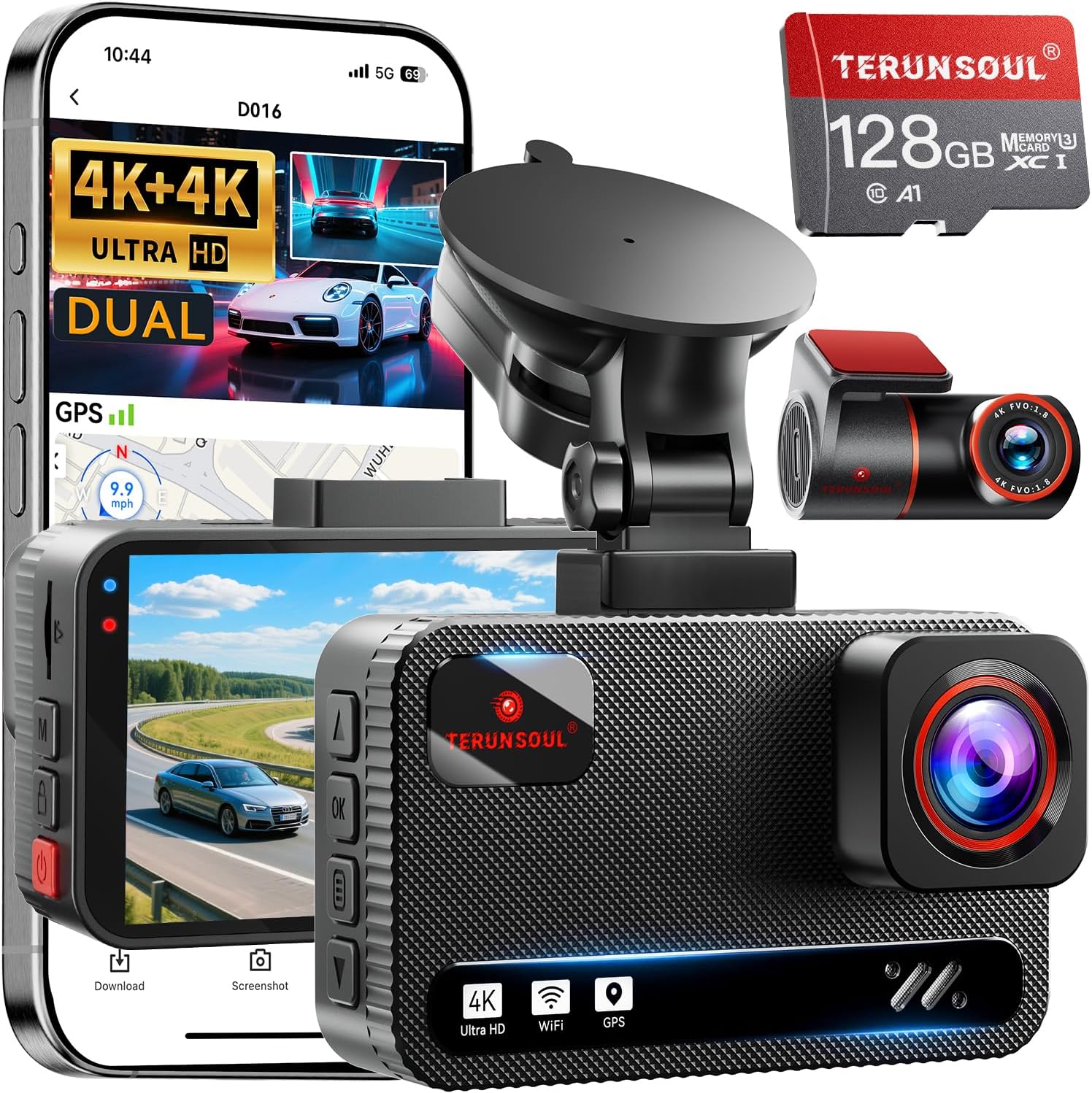
If you're outfitting a second rig or want a backup unit, this three-channel 4K system ships with a 128GB card included, which saves you another $20 versus buying separately. The included card is rated for the high-endurance write cycles dash cams demand. Parking-mode draw sits around 380mA, which is fine for a weekend boondocker but starts to add up on a two-week dry-camping trip. See the 4K 3-Channel Dash Cam with 128GB on Amazon.
Best budget pick for a tow vehicle behind the motorhome: ROVE R2-4K Dual
If your dash cam only needs to watch the road from a tow vehicle and you're running it off the tow vehicle's own 12V system rather than the house bank, the ROVE R2-4K Dual is the value play. STARVIS 2 sensor, 4K front, 1080p rear, and a 128GB card in the box. Parking mode is motion-only and pulls about 280mA, which is friendly even on smaller AGM banks. View the ROVE R2-4K Dual Dash Cam on Amazon.
How to hardwire either flagship to a 12V or 24V RV solar system
Both the U3000 and N5 hardwire kits expect a nominal 12V input and will tolerate the 13.6-14.4V you'll see when the solar charge controller is in bulk or absorption phase. If your rig is a 24V system (most modern Class A coaches), you'll need a 24V-to-12V DC buck converter rated for at least 3A to drop the voltage cleanly. Don't try to tap a 12V accessory circuit downstream of the converter you already use for the lighting — dash cams generate noise that can backfeed onto the bus.
Wire the constant (B+) lead to a fused 5A circuit on the house battery side of the disconnect, the ignition lead to a switched circuit if you have one (or jumper it to constant for always-on parking mode), and the ground to chassis. The Vantrue and Thinkware hardwire kits both expose a small DIP switch or menu setting for cutoff voltage — set it to 12.2V the day you install it.
For more options across different rig sizes, see our roundup of the best dash cams for RVs in 2026 and our deep-dive on the best 4K dash cams of 2026. If you're cross-shopping these two brands more broadly, our Thinkware vs Vantrue 2026 brand comparison covers reliability, warranty, and firmware update cadence.
Frequently Asked Questions
Will the Thinkware U3000 drain my RV's lithium house battery overnight in parking mode?
No, not overnight. The U3000 pulls roughly 400mA at 12V in Energy Saving 2.0 parking mode, which is about 5Wh per hour or 120Wh over 24 hours. A 100Ah LiFePO4 bank stores around 1280Wh usable, so the camera alone is under 10% of daily capacity. The risk shows up on multi-day cloudy boondocking stints when your fridge, Starlink, and vent fans are already eating most of the solar harvest.
Can I run the Vantrue N5 directly off a 12V cigarette outlet powered by my solar system?
You can, but you'll lose parking mode. The cigarette outlet typically only has power when the ignition is on or when a master switch is thrown. For continuous parking-mode protection you need to hardwire the N5 to a constant 12V source with the official hardwire kit, which is what enables the configurable voltage cutoff that protects your LiFePO4 bank.
What voltage cutoff should I set for a LiFePO4 lithium battery bank in my RV?
Set it to 12.2V if your hardwire kit supports it. At rest, a LiFePO4 cell reads about 13.2V at 100% state of charge and drops to 13.0V across the middle 80% of usable capacity. By the time the resting voltage hits 12.2V you're at roughly 20-30% state of charge, which is the right place to disconnect non-essential loads before the BMS triggers a hard low-voltage cutoff.
Does parking mode on the Vantrue N5 work without an external battery pack like a Cellink B?
Yes. The N5's parking mode works directly off the vehicle's battery through the hardwire kit, with the voltage cutoff protecting against over-discharge. An external pack like the Cellink Neo 8 is only necessary if you want to leave parking mode running for weeks at a time at an unpowered storage lot. For active RV use with solar replenishment, the hardwire kit alone is the right answer.
Are dash cams safe in high RV roof and dashboard temperatures during summer?
Supercapacitor-based cameras like the U3000 and N5 are safe up to 70°C. Avoid any dash cam that uses an internal lithium-ion battery — those degrade rapidly above 50°C and can swell or vent in a hot RV. Both flagships in this comparison use supercaps specifically to handle dashboard heat, which is why they cost more than $200 cameras that still ship with internal Li-ion cells.
Can I hardwire a dash cam to a 24V RV solar inverter system?
Not directly. The U3000 and N5 hardwire kits expect a 12V nominal input. For a 24V coach you need a small DC-to-DC buck converter rated for at least 3A continuous output at 12V, wired between your 24V house bus and the camera's hardwire kit. Make sure the converter is isolated and rated for automotive noise, otherwise you may see corrupted footage or microSD card errors.
Do I need a separate microSD card or do these cameras include one?
Both the U3000 and N5 are sold camera-only at their flagship price points and require you to add a high-endurance microSD card. Buy a name-brand high-endurance card rated for at least 1000 write cycles — a 256GB Samsung Pro Endurance or SanDisk High Endurance is the safe pick for either camera. The Vantrue N5 supports up to 512GB, which is useful if you're recording four channels in parking mode for days at a time.
Key Takeaways
- Choosing the right Thinkware U3000 vs Vantrue N5 for RV owners with solar battery banks means matching capacity and output ports to your actual devices
- Always check actual watt-hours (Wh), not just watts — runtime depends on Wh, not peak output
- Also covers: Thinkware U3000 RV solar power dash cam
- Also covers: Vantrue N5 motorhome solar setup
- Also covers: best 4ch dash cam for RV solar battery
- Compare price-per-Wh across models to find the best value for your budget