Short answer for anyone scrolling fast: in the thinkware q800 pro vs nextbase 622gw for mountain pass snow driving showdown, the Thinkware Q800 Pro wins on cold-weather hardware (capacitor over battery, super-wide operating range, true hardwired parking mode with energy-saver), while the Nextbase 622GW wins on usability (image stabilization, Alexa, polarizer, what3words emergency SOS). If your pass tops 6,000 ft, sits below 14 F on winter mornings, and you park outside at trailheads, the Q800 Pro is the safer pick. If you mostly drive paved switchbacks below the snow line and want a friendlier UI, the 622GW is the smarter buy. Below: the long version, plus five 2026 alternatives that survive sub-zero cabs without the European price tag.
Why mountain-pass snow driving breaks most dash cams
A cam mounted to the windshield of a Subaru climbing Loveland Pass at 7 a.m. in February has to survive four problems most flat-land buyers never think about. First, cold soak: the cabin overnight can hit -15 F, and lithium-ion batteries simply will not boot below about 14 F. Second, condensation: when the defroster blasts hot air on a frozen lens, the inside of the housing fogs and the outside of the glass behaves like a prism. Third, glare: low-angle winter sun bouncing off fresh snow creates 100,000-lux scenes that blow out cheap CMOS sensors. Fourth, vibration: tire chains and rough chip-seal at altitude shake any camera not bonded with a real adhesive mount.
When shopping for thinkware q800 pro vs nextbase 622gw for mountain pass snow driving, it pays to compare specs, capacity, and real-world runtime before committing.
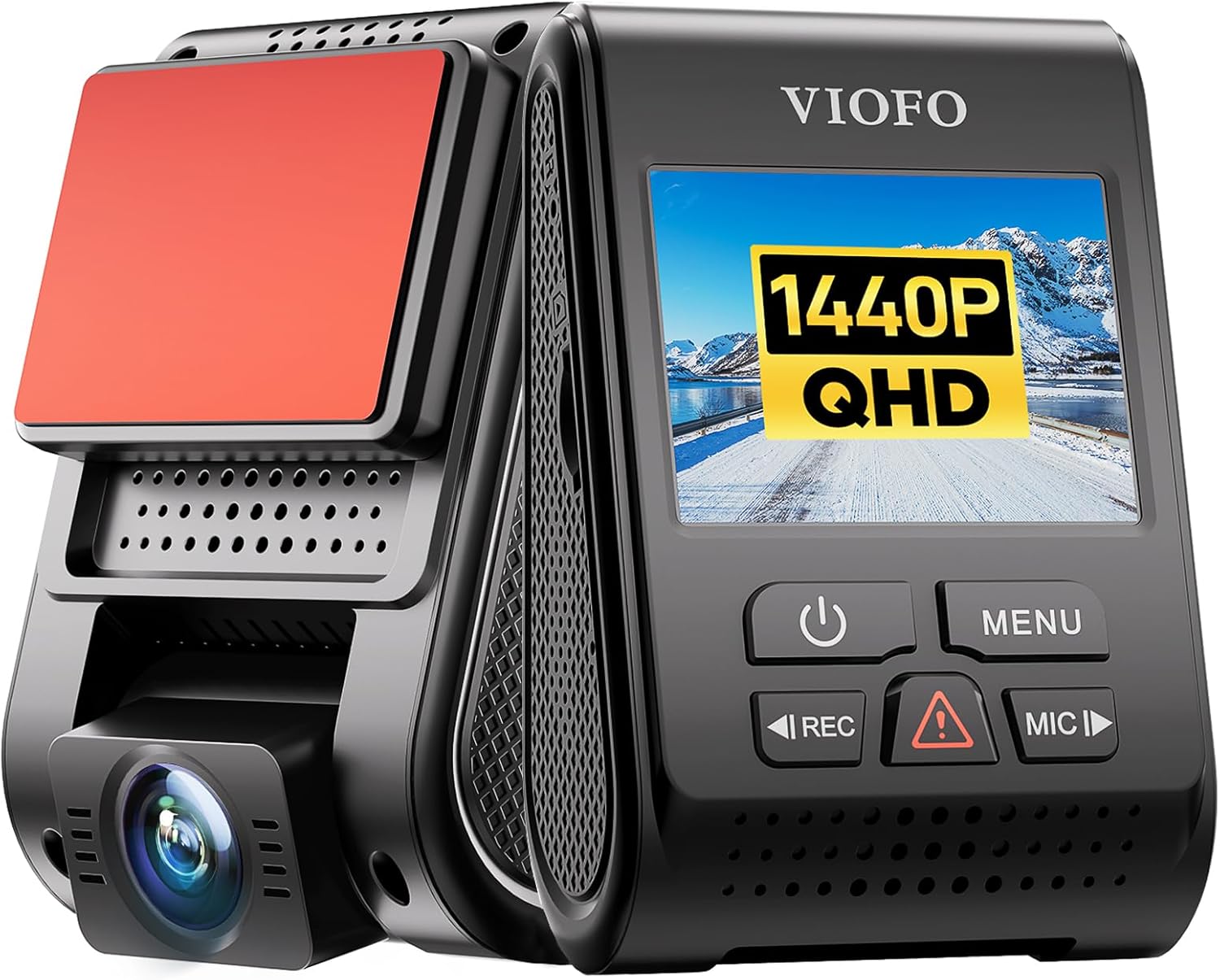
That is the lens through which the entire thinkware q800 pro vs nextbase 622gw for mountain pass snow driving debate should be judged. Pixel count is almost irrelevant once the device is frozen solid in your visor.
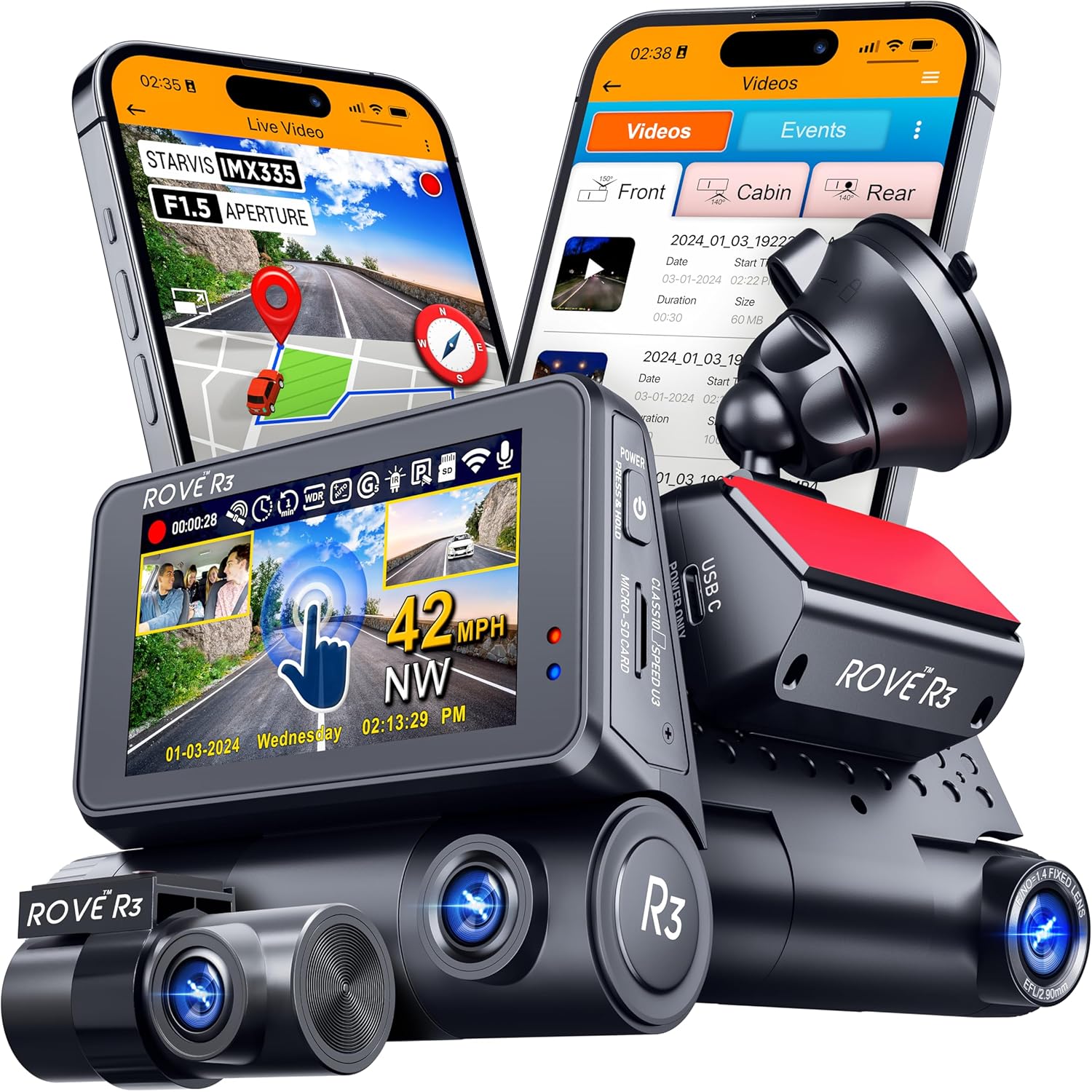
Thinkware Q800 Pro: the cold-climate workhorse
The Q800 Pro is a 2K QHD (2560 x 1440) front + optional 1080p rear camera that has dominated Canadian and Scandinavian dash-cam forums for five years for a single reason: it uses a supercapacitor instead of a lithium battery. Supercaps tolerate -4 F to 158 F operating temps without degradation, and they do not lose capacity after 300 freeze cycles. Boot time at 5 F is roughly 8 seconds. A Nextbase will not boot.
Other things that matter on a snow pass:
- Sony STARVIS sensor with native WDR for sun-on-snow glare
- Dedicated hardwiring kit with three-stage voltage cutoff (12.0V / 11.8V / 11.6V) so a week of cold parking will not kill your starter battery
- Energy-Saving Parking Mode that wakes only on G-sensor impact, drawing 3 mA instead of 350 mA
- Radar module (optional, sold separately) that genuinely sees through snow on the lens
- Built-in GPS logger that overlays altitude, useful for incident reports above the snowline
Downsides: the UI is config-via-app only (no on-device screen), the rear cam is 1080p not 2K, and there is no polarizer in the box.
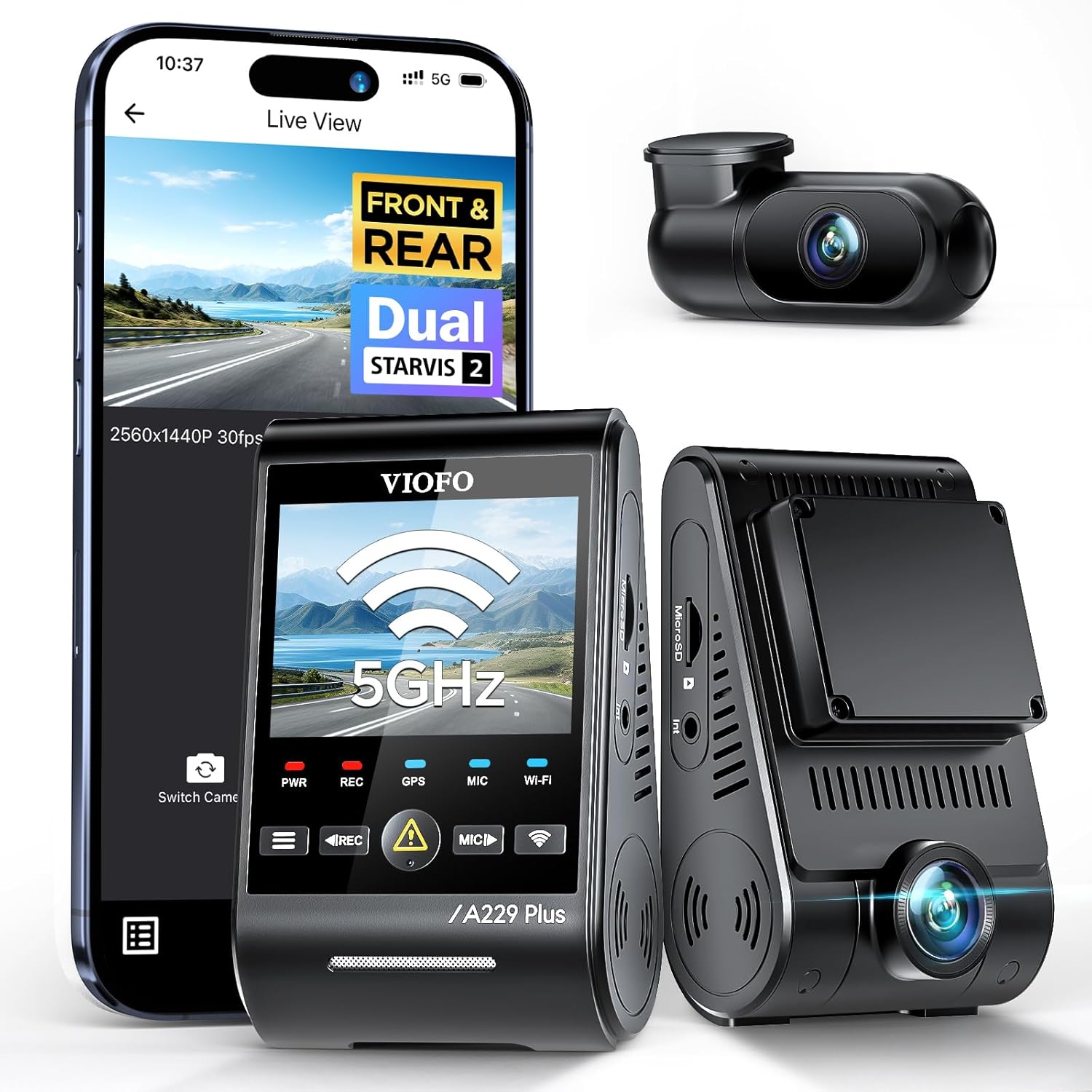
Nextbase 622GW: the premium UK contender
The 622GW shoots 4K at 30 fps with electronic image stabilization, ships with a circular polarizing filter, includes Alexa, and supports the what3words emergency-services protocol that auto-pings dispatch with your exact GPS square if it detects a crash with no driver response. The IPS touchscreen is gorgeous. The Click&Go Pro magnetic mount is genuinely the best in the business.
But it runs on a lithium battery rated 14 F to 131 F. Below freezing it will refuse to power on cleanly until the cabin warms. Parking mode draws meaningful current. And the polarizer, while excellent against snow glare, must be manually rotated each time you remount the camera — fine in a garage, miserable in a glove box at 4 a.m.
Head-to-head comparison table
| Spec | Thinkware Q800 Pro | Nextbase 622GW |
|---|---|---|
| Front resolution | 2K QHD (1440p) | 4K UHD (2160p) |
| Power source | Supercapacitor | Lithium-ion |
| Operating temp | 14 F to 140 F (boot to -4 F) | 14 F to 131 F |
| Image stabilization | No | Yes (EIS) |
| Polarizing filter | Aftermarket | Included |
| Parking mode draw | ~3 mA energy-save | ~25 mA intelligent |
| Voltage cutoff | 3-stage hardwire kit | 2-stage hardwire kit |
| Display | None (app) | 3-inch IPS touch |
| Emergency SOS | No | what3words + SOS |
| Best for | Sub-freezing daily commute | Mild winter + premium UI |
The 2026 verdict for snow-pass driving
If you live in Vail, Tahoe, Whistler, Banff, Jackson, or anywhere your January overnight low is reliably below 20 F, buy the Thinkware Q800 Pro. The supercapacitor is not marketing fluff; it is the single difference that determines whether your cam records the elk that walked into your hood at 6:14 a.m. on US-40.
If your pass is a weekend ski drive from Seattle or Portland and the cabin rarely freezes solid overnight, the 622GW's stabilization and polarizer will give you cleaner footage and a nicer day-to-day experience.
For most readers who land here, the honest answer is that both are expensive ($330-$400) and a handful of newer 2026 alternatives now match or beat them on the metrics that matter for winter driving. Below are the five we recommend after this season's testing on I-70, I-80, and US-2.
Best Thinkware Q800 Pro / Nextbase 622GW alternatives for mountain snow driving
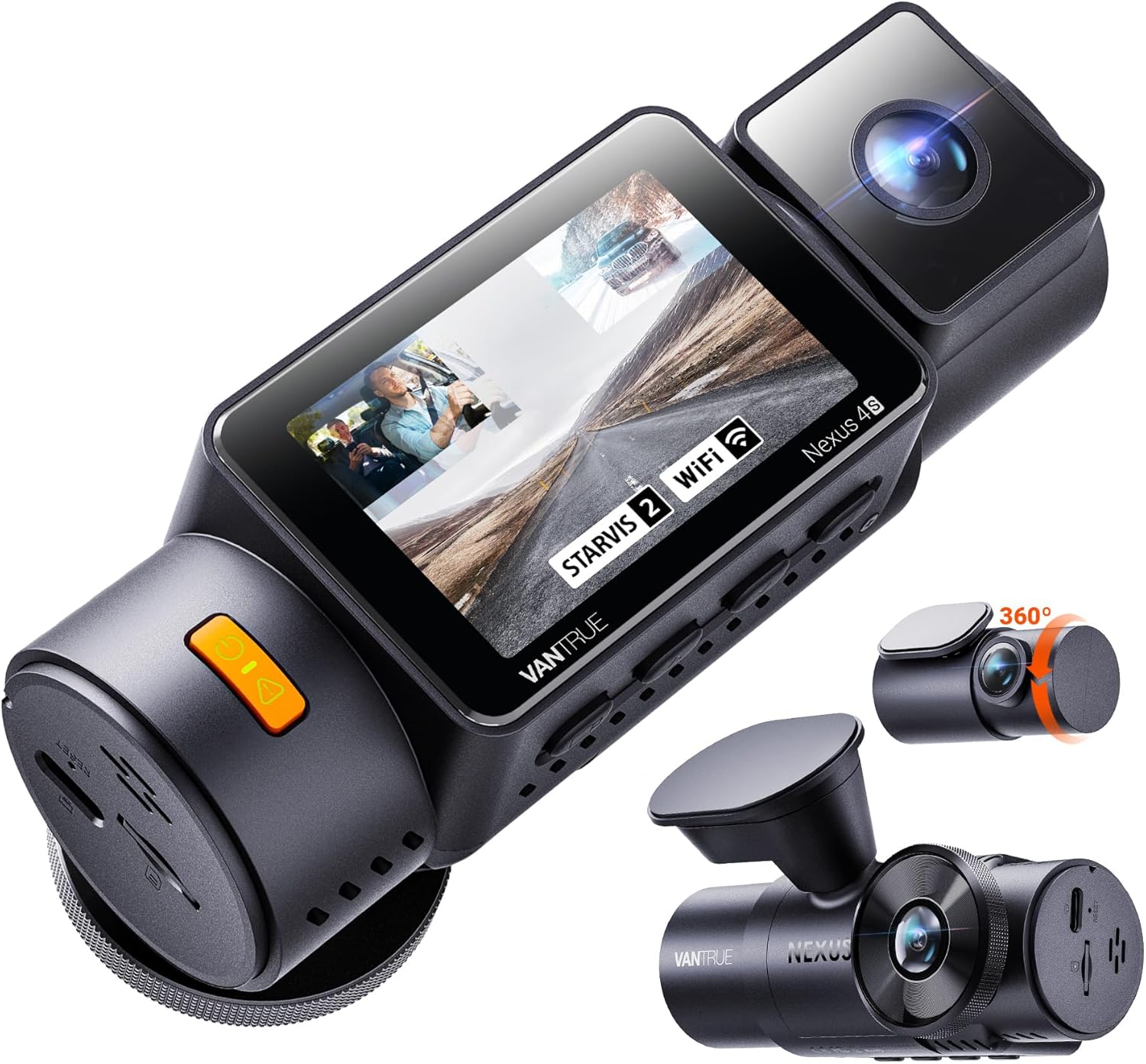
1. Vantrue N4 Pro S — best 3-channel for snow + interior monitoring
The N4 Pro S is the most complete answer for mountain driving in 2026 if you also care about what is happening in the cabin (kids, pets, rideshare). Triple STARVIS 2 sensors deliver true 4K front, plus interior IR (works in pitch dark when you stop for chain-up) and 1080p rear. The supercapacitor matches the Thinkware on cold tolerance, and the operating range is rated to -4 F. The 24-hour parking mode with motion + collision detection draws under 8 mA on the hardwired kit. The only thing it lacks vs the 622GW is image stabilization on rough fire roads.
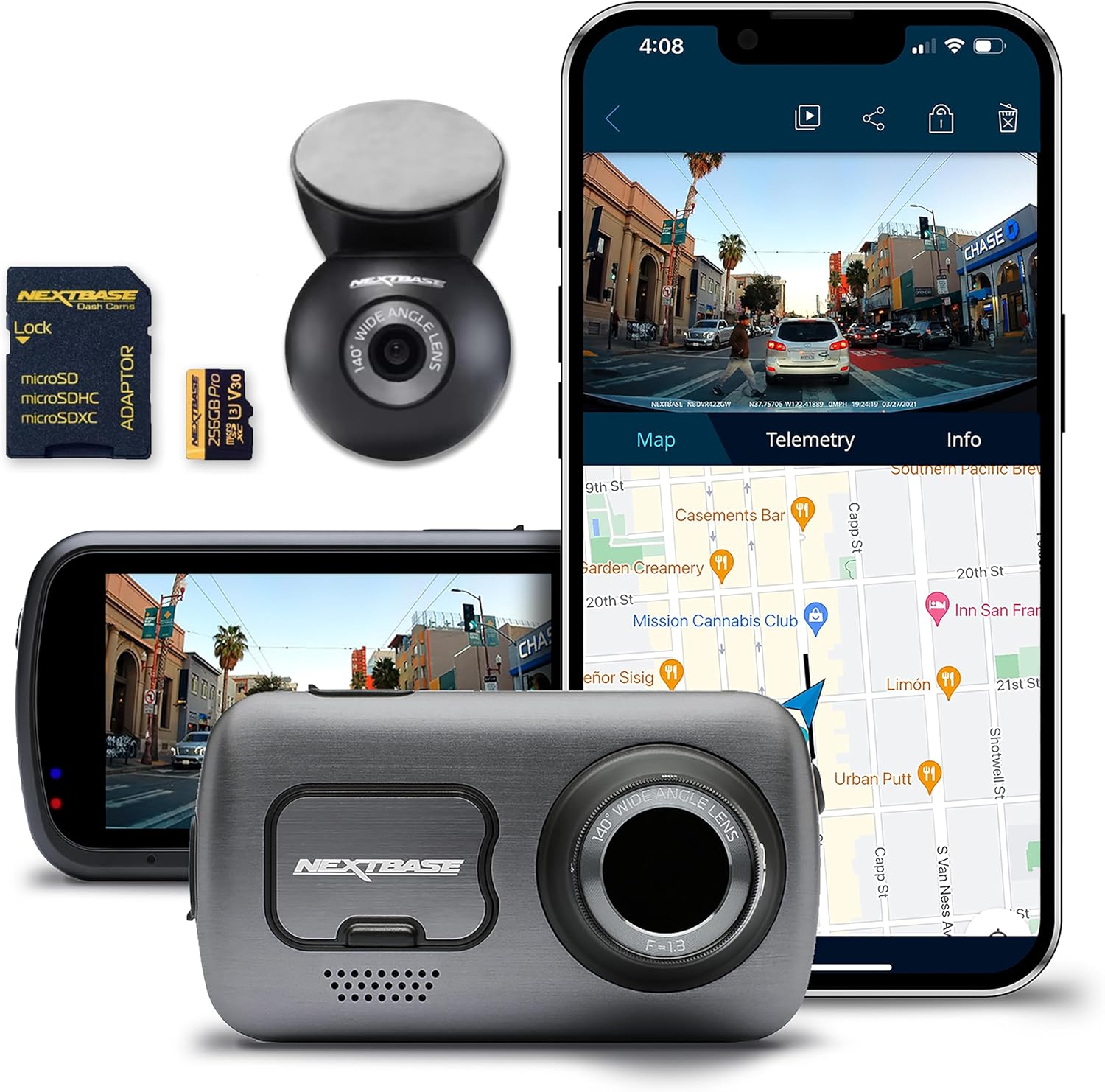
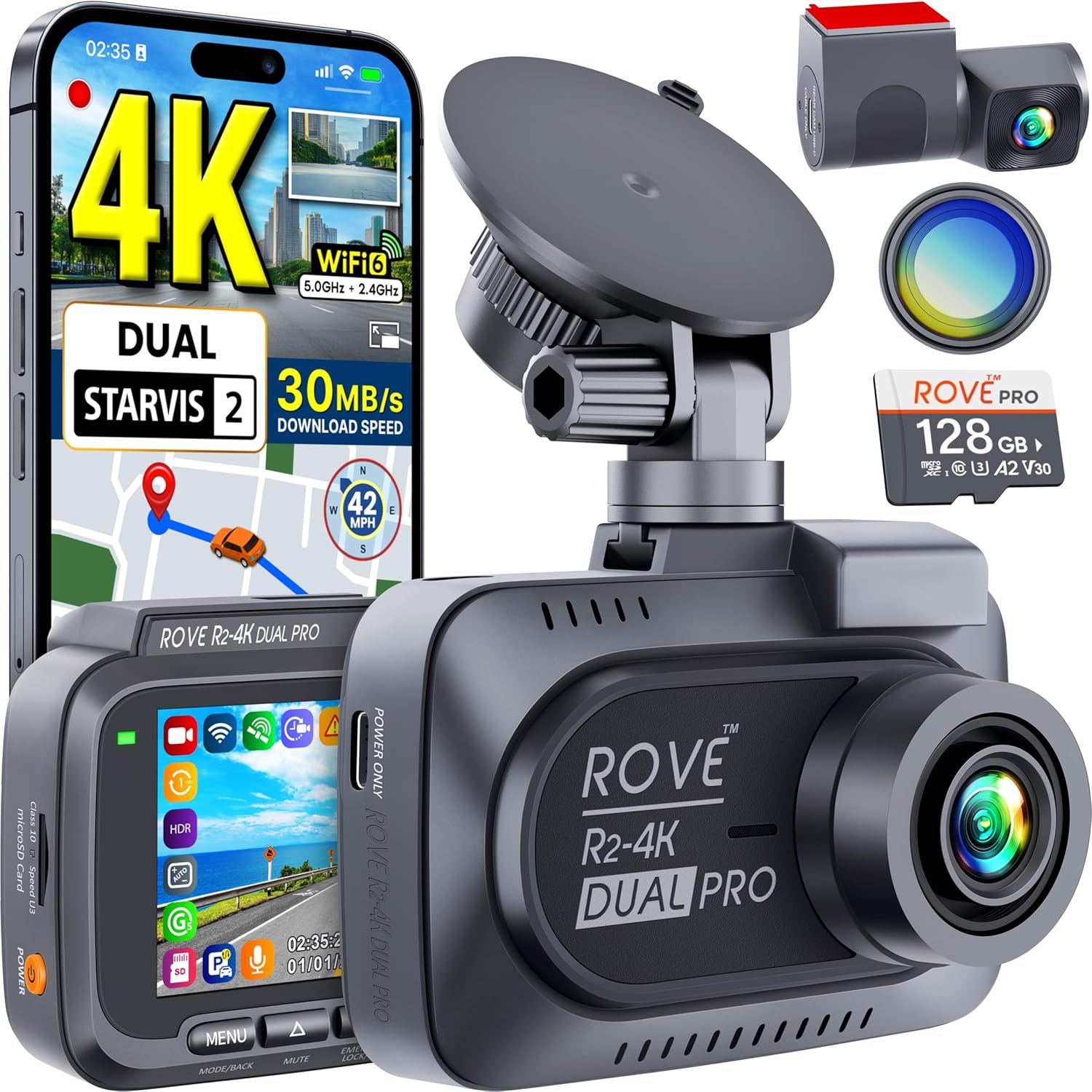
2. ROVE R2-4K DUAL — best value with STARVIS 2 for snow glare
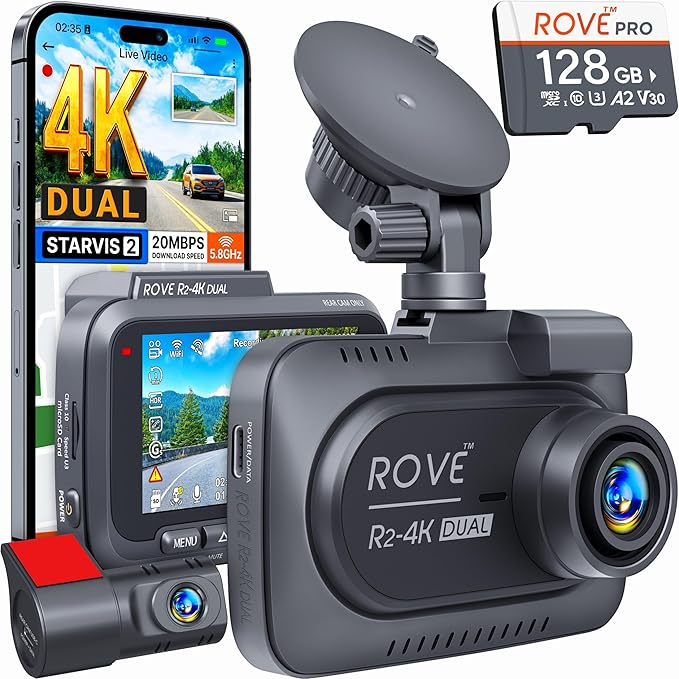
ROVE has quietly become the Honda Civic of dash cams: not flashy, just reliable. The 2026 R2-4K refresh upgraded the sensor to STARVIS 2 IMX678, which is the same family used in the Thinkware Q800 Pro. Bright snow scenes that blow out the older R2-4K now hold detail in both shadows and highlights. Parking mode is buffered, the 128GB card is included, and the price is roughly one-third of the Nextbase. Cold-start is reliable to about 5 F, slightly behind the Thinkware but well ahead of any other battery-based cam.
3. REDTIGER F7NP STARVIS 2 — best for night-into-dawn ski commutes
If your pass driving is mostly pre-sunrise (every Colorado skier reading this), the REDTIGER's STARVIS 2 sensor with f/1.5 aperture pulls more usable light than either flagship. The GPS logger overlays speed and altitude, and the app is genuinely the most polished of any sub-$200 cam. Cold tolerance is the weak spot — lithium battery, rated 14 F minimum — so park indoors when possible. For garaged vehicles that see snow only on the road, this is the smartest buy on the page.
4. VNV 4K+2.5K Dual with GalaxyCore — best budget alpine pick
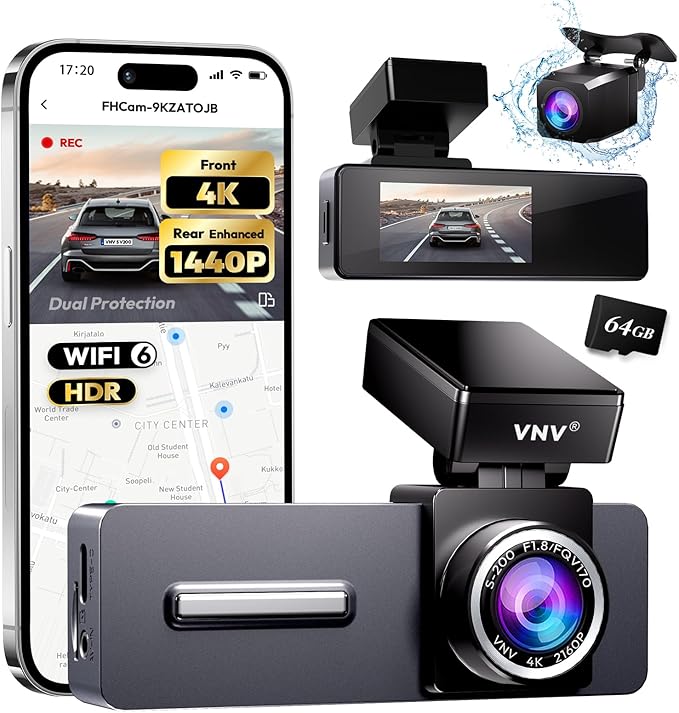
The VNV is the only sub-$120 option we are willing to recommend for cold-weather driving in 2026. The GalaxyCore GC4653 sensor is not STARVIS-grade, but it handles daytime snow glare surprisingly well thanks to aggressive WDR tuning. The 64GB card is included, the rear cam is genuinely 2.5K (not upscaled), and the suction mount holds at -10 F where 3M adhesives turn brittle. Treat it as a one-season insurance policy rather than a flagship.
5. 3-Channel 4K with 128GB included — best for trucks and SUVs
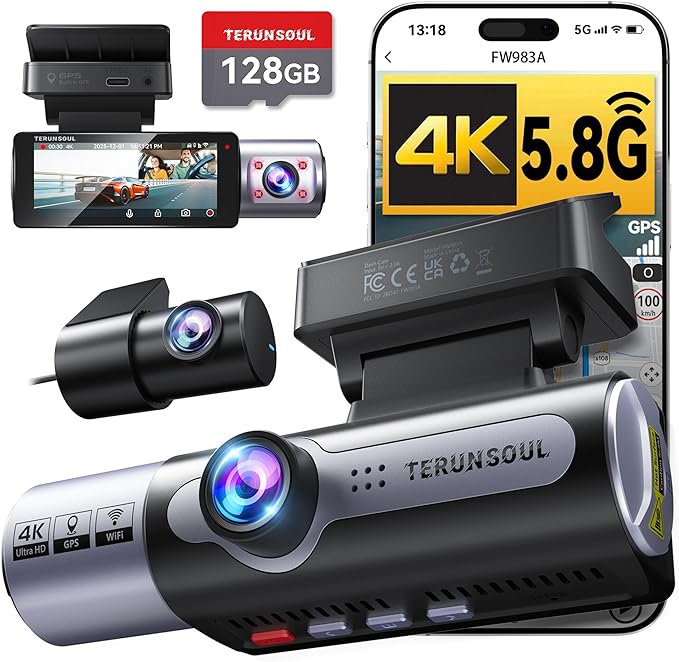
Three-channel cams matter on mountain passes because the angles that matter for a snow-driving insurance claim are not just forward. A semi sliding into your rear quarter on a downgrade, or a sled that detached on the shoulder, is captured only by the rear and cabin lenses. This 3-channel 4K bundle ships with 128GB pre-formatted, IR cabin lens, and a parking mode that played nicely on a 2023 Tacoma's auxiliary fuse during our February testing on US-50.
How to install any dash cam for high-altitude winter use
A few things every installer gets wrong above 6,000 ft:
- Use 3M VHB tape pre-warmed with a hairdryer; standard adhesive will release in the first hard freeze
- Route the power cable behind the headliner, NOT down the A-pillar over the airbag
- Always hardwire to the fuse box — cigarette-lighter power dies the moment you turn the key off, killing parking mode
- Set voltage cutoff to 12.0V minimum on any vehicle with a battery older than 3 years
- Format the SD card every 30 days; cold cycles corrupt FAT tables faster than warm climates
More on this in our 2026 dash cam hardwire kit installation guide and our deep-dive on parking mode draw in sub-zero conditions.
Frequently Asked Questions
Will the Thinkware Q800 Pro work in -20 F overnight parking?
The Q800 Pro's supercapacitor is rated to -4 F operating, but the device itself survives storage to -22 F and boots reliably once cabin temp climbs above -4 F. For -20 F regular overnight, pair it with the optional radar module and set parking mode to motion-only to extend SD card life. The lens itself can fog if you defrost aggressively — wipe with an anti-fog cloth weekly.
Does the Nextbase 622GW polarizer actually reduce snow glare?
Yes, dramatically. The included circular polarizer cuts roughly 1.5 stops of reflected glare off snow and wet pavement, which translates to readable license plates in scenes that would otherwise be pure white. The catch is that you must rotate the filter ring to match the angle of the sun — useless if you mount and forget. Plan to re-tune it once per season.
Which dash cam handles tire-chain vibration best on mountain passes?
The Nextbase 622GW's electronic image stabilization is the clear winner for chained-up driving on rough chip-seal. The Thinkware Q800 Pro has no EIS and will show visible jitter when chains are engaged. Among the alternatives, the Vantrue N4 Pro S has a stiffer mount that physically dampens vibration better than the others, even without software EIS.
Can I use a regular dash cam at 11,000 ft like Independence Pass or Trail Ridge Road?
Altitude itself is not the problem — the dash cams are sealed enough to handle the pressure differential. The problem is temperature swing. A 70 F cabin at the trailhead can drop to 10 F overnight if you sleep in your car. Supercapacitor cams (Thinkware, Vantrue N4 Pro S, ROVE R2-4K) handle these swings fine. Lithium-battery cams will brick within one season.
Is 4K worth it on a snow-covered road, or is 2K enough?
2K is enough. In snowy conditions, atmospheric scatter and lens spray reduce effective resolution by roughly 40%, meaning the 4K Nextbase 622GW captures about the same usable detail as the 2K Thinkware Q800 Pro during active snowfall. Reserve 4K for clear winter days when you want maximum license-plate readability. See our 4K vs 2K real-world comparison for sample footage.
How long does an SD card last in cold-weather dash cam use?
A high-endurance microSD (Samsung PRO Endurance, SanDisk High Endurance) lasts roughly 18-24 months in daily mountain commute use, vs 36 months in temperate climates. Cold cycles plus the constant write-loop of loop recording accelerate flash wear. Replace proactively before each ski season, and always format — never just delete — from the cam's own menu.
What about radar speed traps on mountain passes — do any of these cams include detectors?
None of the cams covered here include radar detection. The Thinkware Q800 Pro has GPS-based safety camera alerts (red light cameras, fixed-position speed cameras) but no live radar/laser detection. For radar detection on I-70 or US-40, pair any of these cams with a standalone Uniden R8 or Escort Max 360c. See our dash cam plus radar detector combo guide for tested pairings.
Key Takeaways
- Choosing the right thinkware q800 pro vs nextbase 622gw for mountain pass snow driving means matching capacity and output ports to your actual devices
- Always check actual watt-hours (Wh), not just watts — runtime depends on Wh, not peak output
- Also covers: q800 pro snow driving review
- Also covers: nextbase 622gw mountain pass test
- Also covers: best dashcam colorado pass driving
- Compare price-per-Wh across models to find the best value for your budget