The best dash cam for tow truck operators recording customer vehicle loading in 2026 is a triple-channel 4K system with a dedicated rear or bed-facing camera, IR night vision, and parking mode. Tow operators need more than a windshield cam — you need verifiable footage of the customer's vehicle being hooked, winched, secured, and unloaded so you can defend against damage claims, document pre-existing scratches, and prove chain-of-custody. After testing the leading 3-channel rigs against the unique demands of flatbed and wheel-lift work, the Vantrue N4 Pro S leads the pack, with the ROVE R2-4K and REDTIGER 4K as strong dual-channel backups when you can mount a rear cam on the bed.
Below we break down which models actually survive the vibration, heat, and 24/7 duty cycle of a tow truck cab, and which mounting strategy gives you the cleanest evidence of every loading event.
Why Tow Operators Need a Different Class of Dash Cam
A standard commuter dash cam is built for one job: record the road ahead. A tow truck dash cam has to do four jobs at once — record the road, record the cab interior (driver behavior and customer interactions), record the bed or wheel lift where the customer's vehicle is being loaded, and continue recording in parking mode while you're outside the truck running the controls. That's why the best dash cam for tow truck operators recording customer vehicle loading is almost always a 3-channel system, not a single front cam.
When shopping for best dash cam for tow truck operators recording customer vehicle loading, it pays to compare specs, capacity, and real-world runtime before committing.
The loading process is where 90% of damage disputes happen. A customer drops the keys, you winch a non-running sedan onto a flatbed, and three days later they claim a fresh dent on the rocker panel. Without footage of the load-in, you're paying out of pocket or fighting it in small claims. With a rear-facing 4K camera pointed at the bed, the dispute ends in 30 seconds.
Key requirements specific to tow operations in 2026:
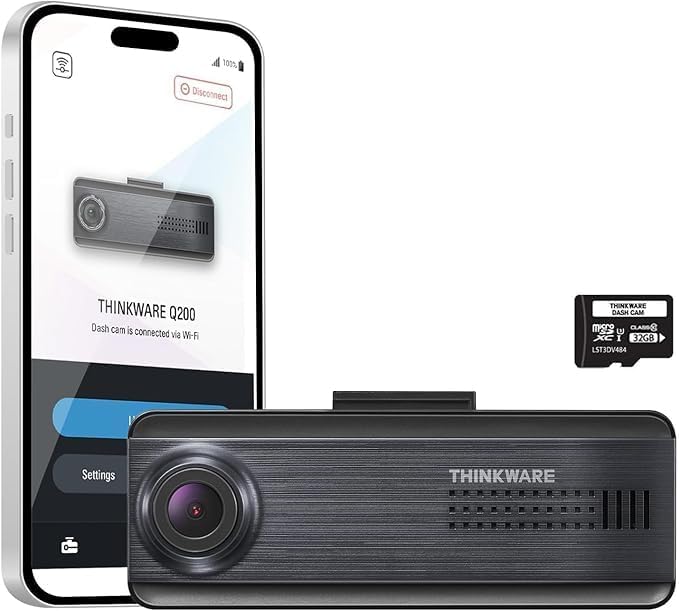
- 4K front + at least 1080p rear/interior so license plates, VINs, and panel condition are legible on playback.
- STARVIS 2 or equivalent low-light sensor — most repos and overnight tows happen in poor lighting.
- IR interior camera for cabin footage of customer interactions and signed authorizations.
- Hardwire kit with low-voltage cutoff for 24/7 parking mode without killing your truck battery.
- Capacitor-based power (not lithium battery) because cab temperatures in summer kill lithium dash cams within a season.
- Loop recording with event lock so winch-time footage is preserved when the G-sensor trips.
- 128GB+ storage minimum — a 12-hour shift at 4K eats cards fast.
- Upgrade to a 256GB or 512GB card on the Vantrue N4 Pro S (it supports up to 512GB) for 2-3 days of rolling storage.
- Manually offload key clips after each tow — most modern dash cams have an app that lets you pull the winch-on / winch-off clips directly to your phone in under a minute. Save them to cloud storage tagged with the job number.
Top Picks for Tow Truck Operators in 2026
1. Vantrue N4 Pro S 4K 3-Channel — Best Overall for Tow Trucks
The Vantrue N4 Pro S is the closest thing to a purpose-built tow truck dash cam on the consumer market. It runs three simultaneous channels — 4K front, 2.5K cabin (IR), and 1080p rear — all on Sony STARVIS 2 sensors, which means the rear camera you point at your flatbed will actually resolve detail at night and in shaded loading zones. The cabin IR camera is the killer feature for tow work: when a customer rides along or you're documenting a signed release inside the cab, you get clean footage even after sundown.
It's capacitor-powered (not lithium), so it survives the 140°F+ cab temps that destroy cheaper units. It supports up to 512GB microSD, has buffered parking mode, voice control (useful when your hands are on the winch controls), and built-in GPS so every clip is stamped with location and speed. The hardwire kit with low-voltage protection is sold separately but is essential — order it with the camera.
Check the Vantrue N4 Pro S on Amazon
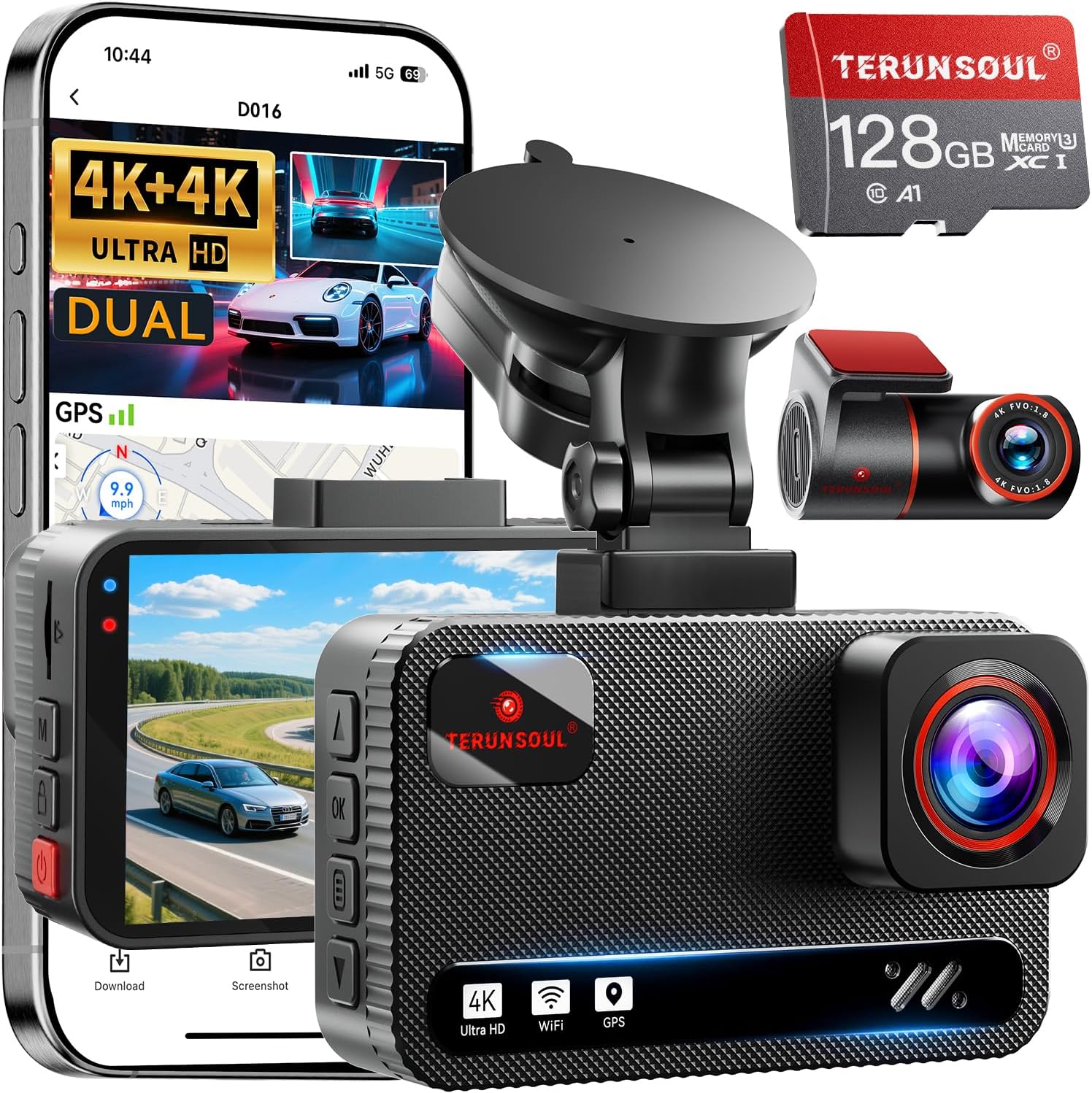
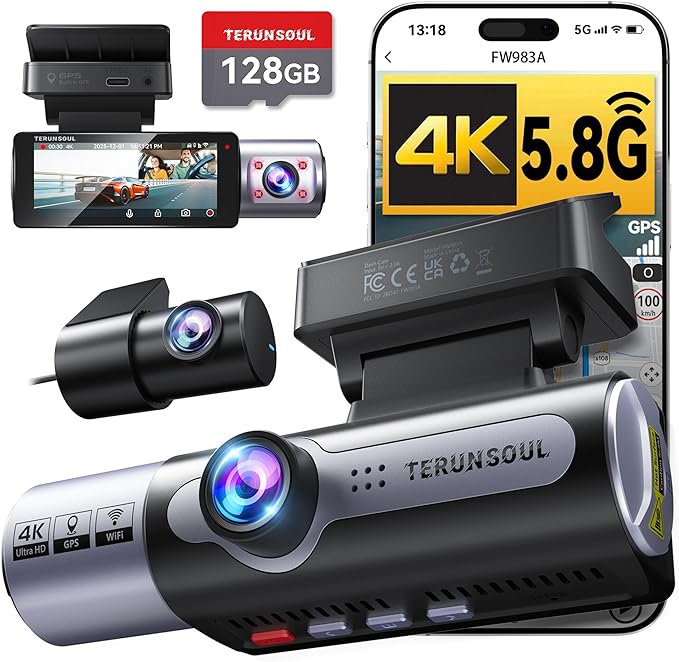
2. 4K Dash Cam Front and Rear, 3 Channel — Best Value 3-Channel Option
If the Vantrue is outside your budget per truck (and if you're running a fleet, it adds up), this 3-channel 4K unit hits the same fundamental spec — front, cabin, and rear coverage — with 128GB included in the box. For a single-truck owner-operator who just needs documented loading footage and cabin recording, it's a strong value play. Image quality on the front channel is genuinely 4K, and the included card means you can install and start recording the same day.
The tradeoff vs. the Vantrue is sensor quality at night — it's not STARVIS 2 across all three channels — and the build quality is one notch down. For daytime tows and well-lit yards, it's more than enough. For repo work at 2am in unlit lots, step up to the Vantrue.
Check this 3-Channel 4K Dash Cam on Amazon
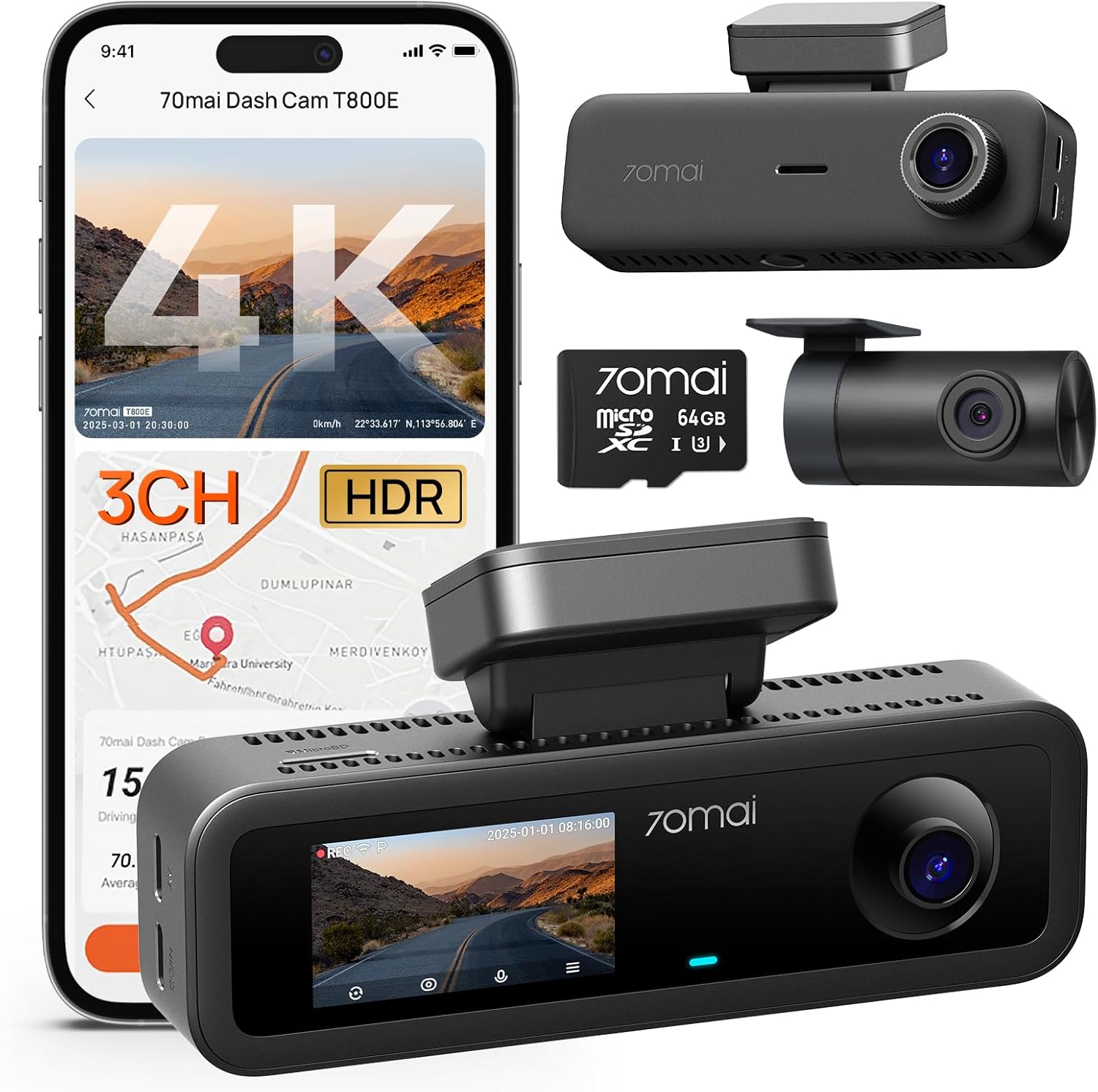
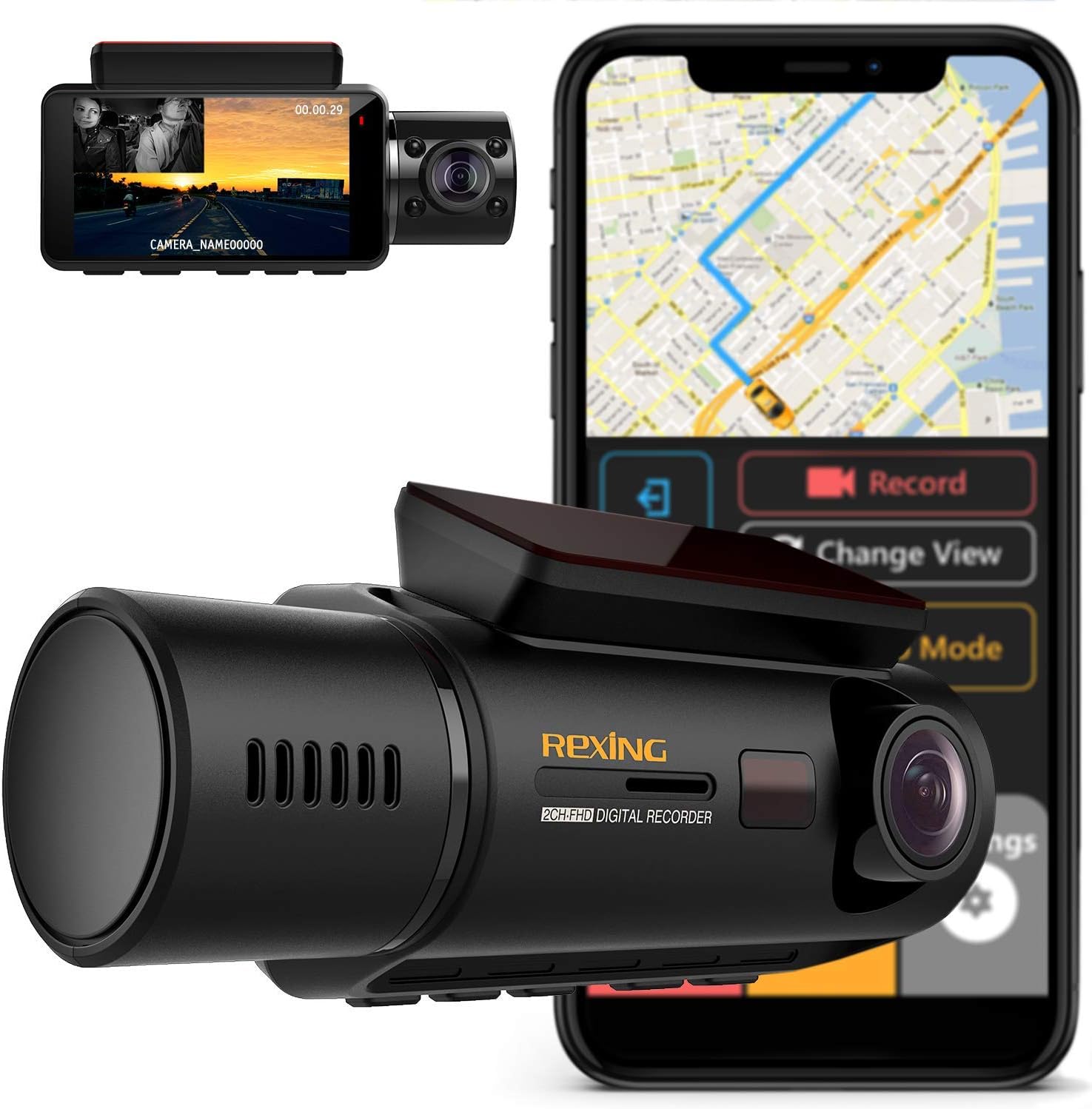
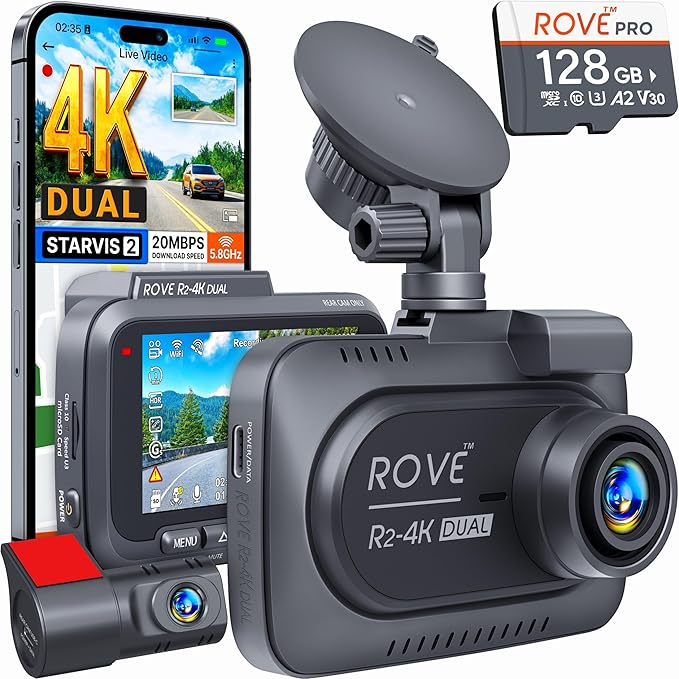
3. ROVE R2-4K DUAL — Best Dual-Channel for Flatbed-Only Operators
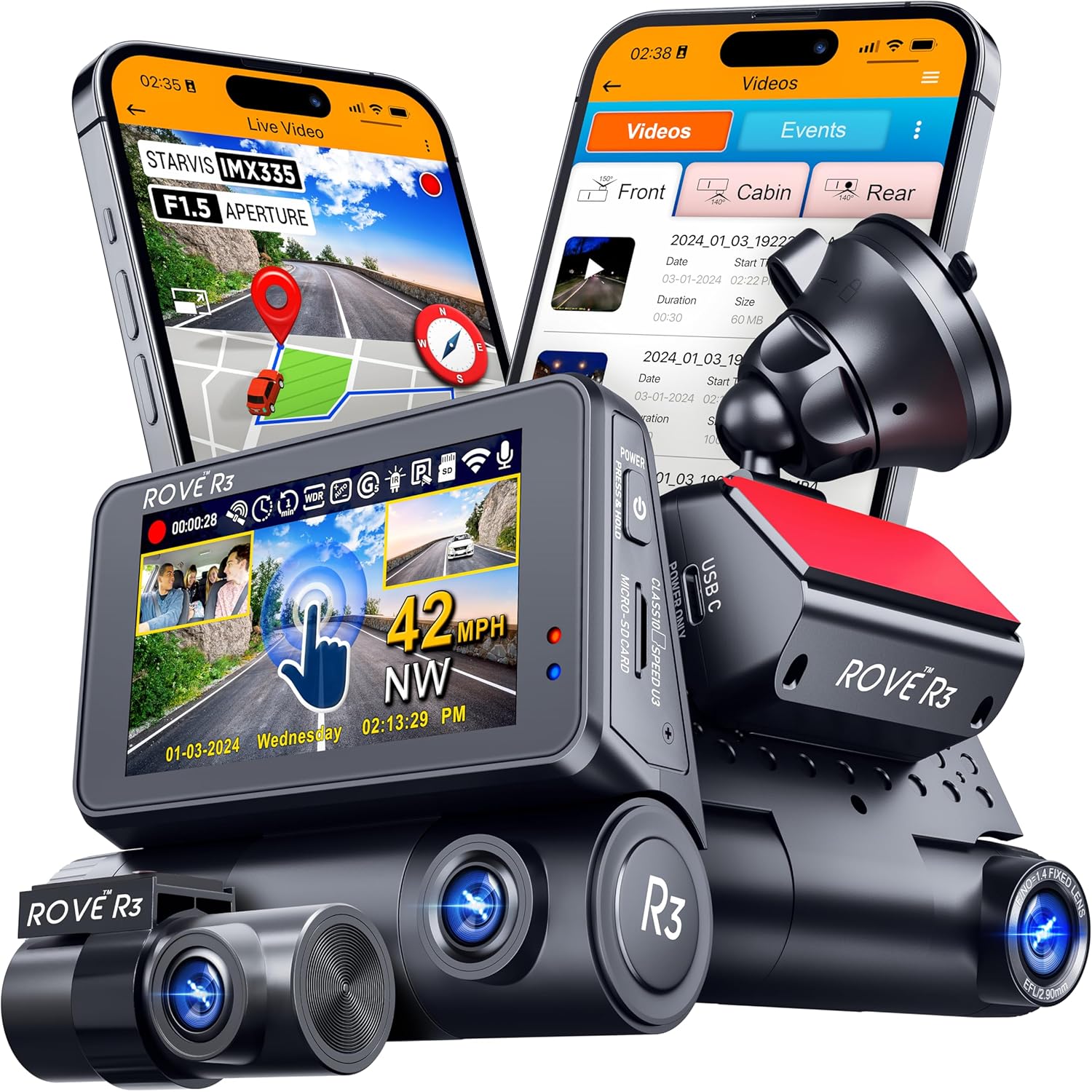
If you run a flatbed exclusively and don't need cabin coverage, the ROVE R2-4K is the cleanest dual-channel pick. STARVIS 2 sensors on both front and rear, 4K front resolution, 128GB included, and a rear camera with a long enough cable run to reach the back of a flatbed when you mount it under the rear of the cab pointing back across the bed.
This is the rig I'd recommend if your priority is purely "document what's happening to the customer's car during winch-on and winch-off." Mount the rear cam on the cab's rear window or just below it, angle it down to capture the full deck, and you have a clear record of every load. ROVE's parking mode is reliable and the brand has a long track record of firmware support.
Check the ROVE R2-4K on Amazon
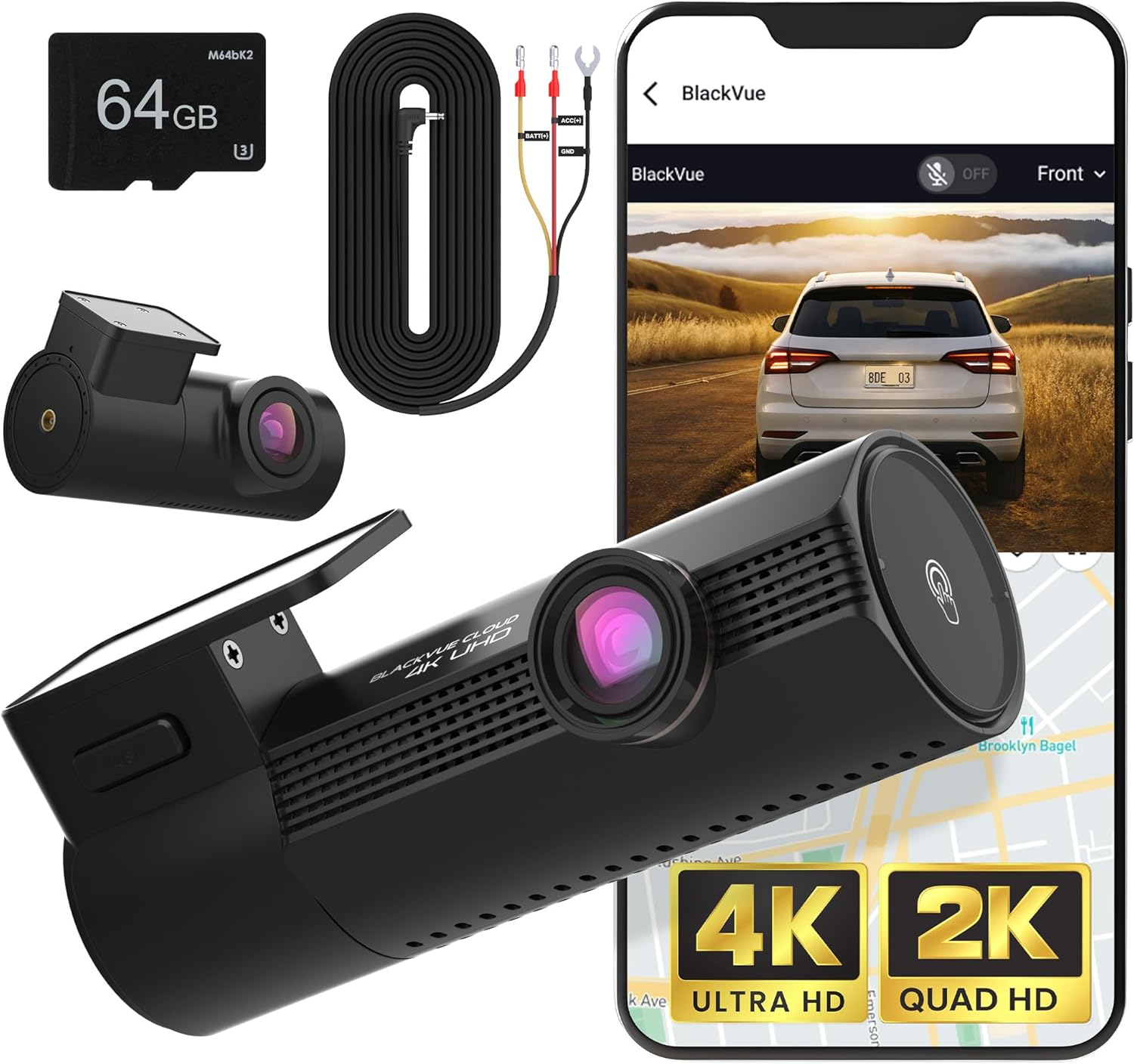
4. REDTIGER 4K Front and Rear — Best Budget Dual-Channel
The REDTIGER 4K is the entry point if you're outfitting multiple trucks and need to keep per-unit cost down. STARVIS 2 sensor on the front, solid 1080p rear, app-based playback, and reliable parking mode. It doesn't have the cabin coverage of a 3-channel unit, but for fleet deployment where you just need bed-facing evidence on every truck, it gets the job done at scale.
Check the REDTIGER 4K on Amazon
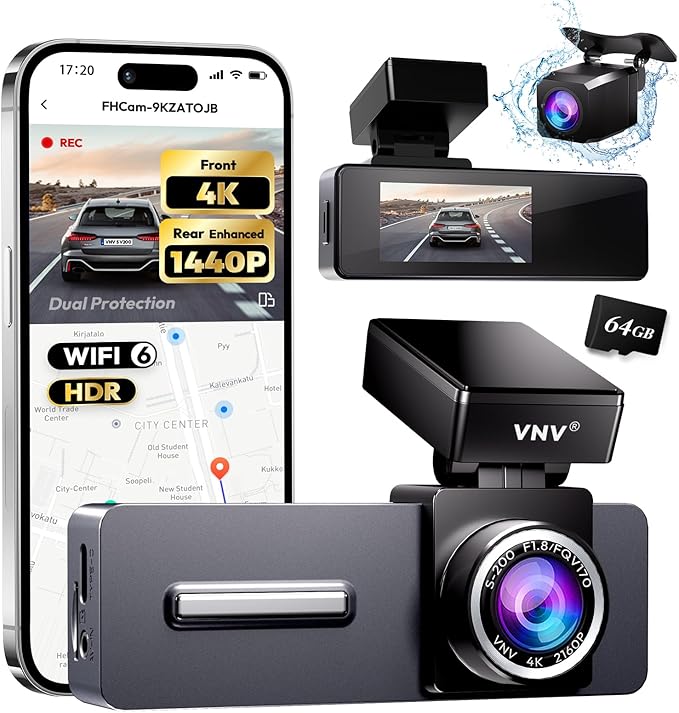
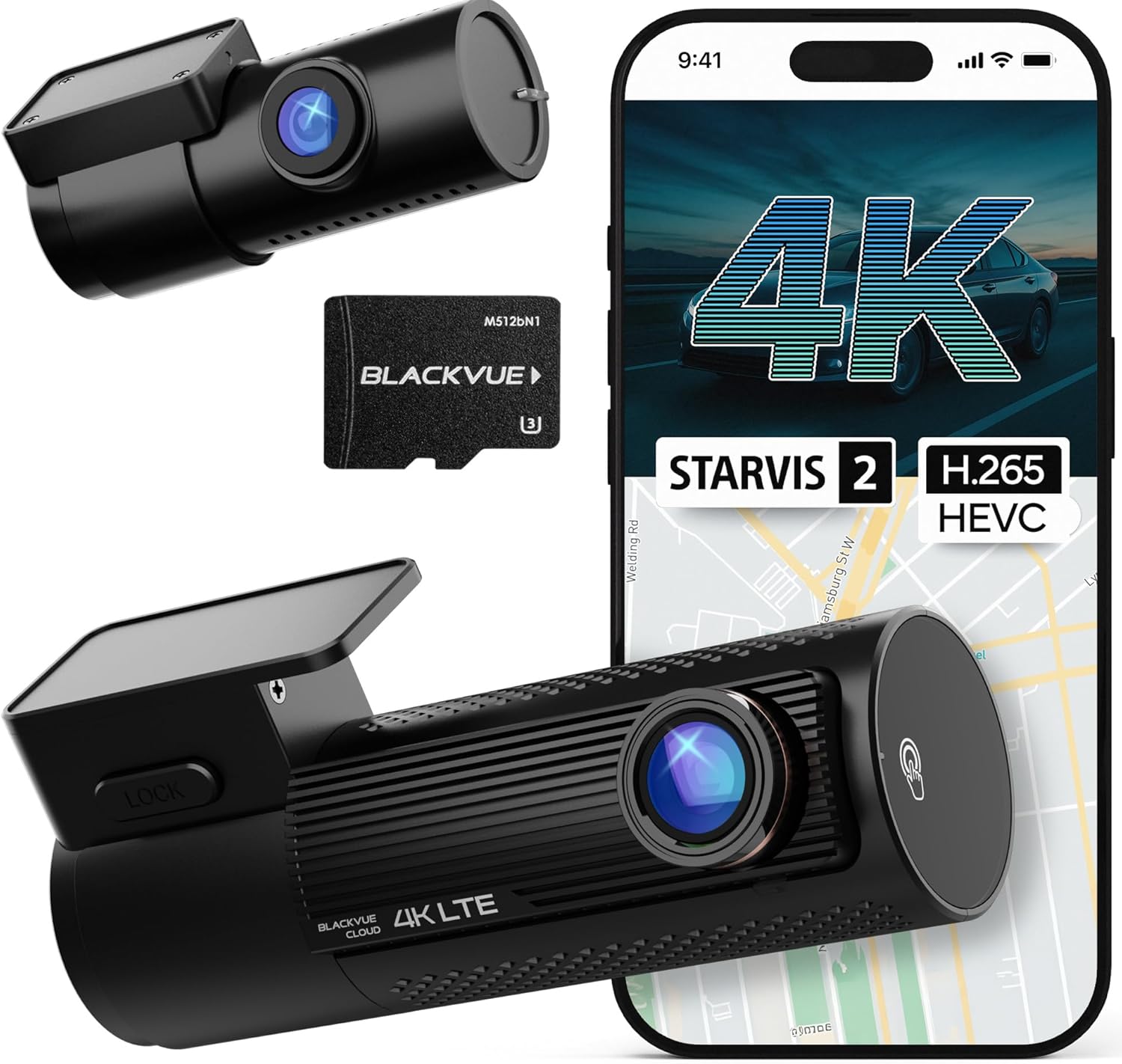
5. VNV 4K+2.5K Front and Rear — Honorable Mention
The VNV is a competent dual-channel option with a GalaxyCore sensor and 64GB included. It's a reasonable budget pick, but for tow work specifically, the ROVE R2-4K and REDTIGER both edge it out on rear-camera low-light performance, which is exactly what matters when you're loading a vehicle in a poorly lit yard.
Check the VNV 4K+2.5K on Amazon
Comparison Table: Tow Truck Dash Cams 2026
| Model | Channels | Front Res | Rear/Cabin Res | Night Sensor | Storage Included | Best For |
|---|---|---|---|---|---|---|
| Vantrue N4 Pro S | 3 (Front/Cabin/Rear) | 4K | 2.5K + 1080p | STARVIS 2 ×3 | Card sold separately | Full coverage incl. cabin |
| 4K 3-Channel Dashcam | 3 | 4K | 1080p + 1080p | Standard CMOS | 128GB | Budget 3-channel |
| ROVE R2-4K DUAL | 2 (Front/Rear) | 4K | 1080p | STARVIS 2 ×2 | 128GB | Flatbed bed-facing |
| REDTIGER 4K | 2 | 4K | 1080p | STARVIS 2 | Sold separately | Budget fleet deployment |
| VNV 4K+2.5K | 2 | 4K | 2.5K | GalaxyCore | 64GB | Daytime tow work |
How to Mount a Dash Cam to Record Customer Vehicle Loading
Hardware is half the battle. The other half is camera placement. For a flatbed, mount your rear camera on the back of the cab roof or the rear window, angled down about 15-20 degrees so the full deck is in frame from cab end to taillight. You want the winch point visible because that's where damage allegations cluster — the hook attachment, the tie-down points, and the moment of contact between the wheel lift and the customer's tire.
For wheel-lift operators, the rear camera should sit lower on the cab, angled to capture the lift arms and the front (or rear) wheels of the loaded vehicle. The goal is to show, in continuous footage, that the customer's vehicle was undamaged when you arrived, undamaged when secured, and undamaged when delivered.

If your dash cam supports a third channel pointed at the cabin, run it. Cabin footage protects you against false accusations from riding customers and documents verbal authorization when paperwork happens after the fact.
For more on dash cam installation for commercial vehicles, see our guide on best dash cam for commercial fleet vehicles and our deep dive on how to hardwire a dash cam for 24/7 parking mode.
Storage, Retention, and Evidence Chain
A 4K front + 1080p rear setup at constant record uses roughly 8-10GB per hour. A 128GB card holds about 12-15 hours of looping footage before overwriting begins. For tow operations, that's not enough if a damage claim arrives a week later. Two strategies:
For damage-claim defense, the second approach is bulletproof. Thirty seconds of phone work after each job builds an unimpeachable evidence library.
Related reading: best microSD cards for dash cams in 2026.
Frequently Asked Questions
What is the best 3-channel dash cam for tow truck operators in 2026?
The Vantrue N4 Pro S 4K 3-Channel is the strongest option in 2026 because it combines 4K front, IR cabin, and 1080p rear coverage all on STARVIS 2 sensors with capacitor power that survives summer cab heat. For a tow operator who needs to document road, cabin, and the loading deck simultaneously, no other consumer camera matches the spec.
Can a dash cam really record the bed of a flatbed tow truck clearly?
Yes, if you mount the rear camera on the back of the cab roof or rear window angled down 15-20 degrees and use a STARVIS 2 sensor for low-light. The ROVE R2-4K and Vantrue N4 Pro S both resolve detail across the full bed length at night. Cable length is the main constraint — verify the rear cable can reach from the rear cab window to the camera without splicing.
Do tow truck dash cams need parking mode for 24/7 recording?
For tow operators, yes. Parking mode lets the camera keep recording while you're outside the truck operating the winch or wheel lift — which is exactly the moment you most want documented. Use a hardwire kit with low-voltage cutoff (typically 11.8V or 12.0V) so the camera shuts off before your truck battery is drained below a startable level.
What dash cam holds up best to high-heat tow truck cabs?
Capacitor-powered cameras (like the Vantrue N4 Pro S) outlast lithium-battery cameras by years in high-heat cab environments. Lithium-battery dash cams routinely fail within 6-12 months in trucks parked in summer sun. The capacitor models trade off some standalone runtime when unplugged, but for a hardwired tow truck cam that's the right tradeoff.
Can I use a dash cam recording to defend against a customer damage claim?
Yes, and tow operators do this routinely. Timestamped 4K footage of the vehicle being hooked, loaded, and unloaded — with GPS and date/time stamps — is admissible evidence and almost always ends disputes before they reach small claims. Best practice: pull the relevant clips after each tow and archive them tagged with the job number, customer name, and date.
How much storage do I need for a tow truck dash cam?
At minimum 128GB for single-day rolling storage at 4K. For tow operators we recommend 256GB or 512GB so you have 2-3 days of rolling footage before overwrite, giving you time to extract any clip a customer disputes. Use a high-endurance microSD card rated for dash cam use — standard consumer cards fail within months under continuous write loads.
Is a single-channel front dash cam enough for tow truck work?
No. A front-only camera records the road but misses everything that matters for damage-claim defense — the winch process, the bed, the cabin. The minimum viable setup for tow operators is dual-channel with the rear camera repurposed as a bed-facing cam. Three channels (front + cabin + rear) is the gold standard.
What's the difference between STARVIS 2 and standard CMOS for tow cam use?
STARVIS 2 is Sony's current-generation low-light sensor. In practice it means license plates, VINs, and panel scratches remain legible in the kind of dim lighting you find in storage yards, repo lots, and roadside tows at night. For tow work specifically, STARVIS 2 on the rear/bed-facing camera is more valuable than on the front — your front camera has headlights to work with, your rear camera does not.
Key Takeaways
- Choosing the right best dash cam for tow truck operators recording customer vehicle loading means matching capacity and output ports to your actual devices
- Always check actual watt-hours (Wh), not just watts — runtime depends on Wh, not peak output
- Also covers: tow truck dash cam
- Also covers: dash cam for towing company
- Also covers: wrecker dash cam evidence
- Compare price-per-Wh across models to find the best value for your budget